
Ticket to Ride: Europe
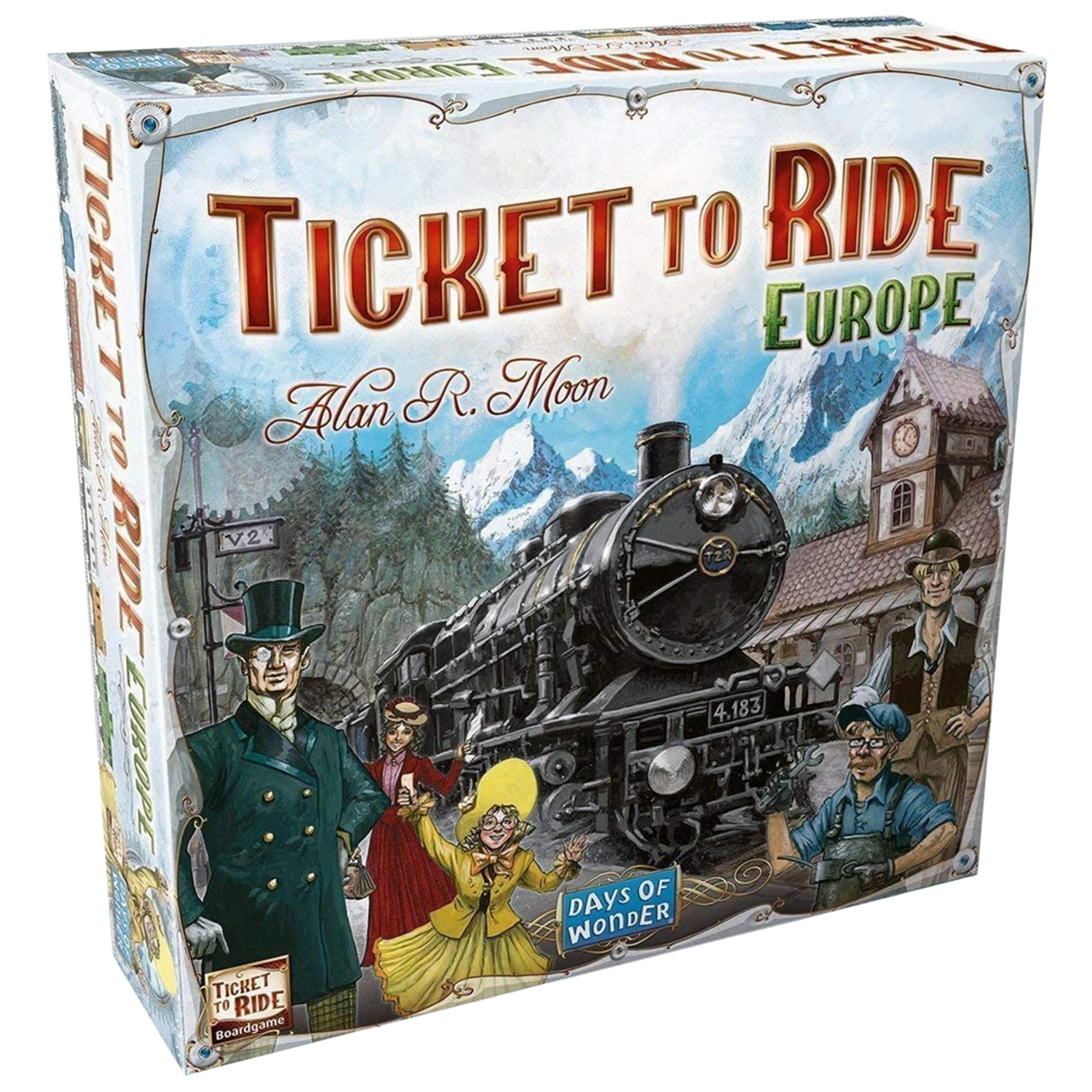
As of this writing, my wife, Logan, and I have just returned to Canada after travelling around Europe. Our trip started in Lithuania, where Logan presented her PhD research at a conference in Vilnius. From there, we flew to Frankfurt, rented a car, and travelled through Germany, Austria, Liechtenstein, and the Swiss Alps before arriving in Zurich, where we dropped off our rental car, and our train adventures began. Tying board gaming into our travels everywhere we went, our first train destination was Carcassonne, France, where we celebrated the 25th anniversary of Carcassonne the board game at the Carcassonne Game Festival. From there we took the train to Barcelona, Spain, where we enjoyed the last few days of our trip seeing the beautiful stained glass at the Basilica of the Sagrada Familia. With Zurich and Barcelona both on the Ticket to Ride: Europe map, travelling between them by train was a surreal experience and made this month’s review a no-brainer. We already had plenty of experience playing the game, and recently started grinding it again on Board Game Arena to prepare for this review.
Ticket to Ride: Europe is a game of hidden information, with much of the strategy coming from disguising where you are going. My experience is primarily at two players, where I usually start by collecting a large number of somewhat random train cards to build my hand without giving away my destinations. Even taking a specific coloured card from the face-up selection can reveal your plans, while placing trains too early can leave you vulnerable to being blocked. I prefer building up a large hand before suddenly completing several sections in a row, while watching my opponent closely enough to secure important routes before they do. This is especially important at two players, where claiming one side of a double route prevents your opponent from using the other.
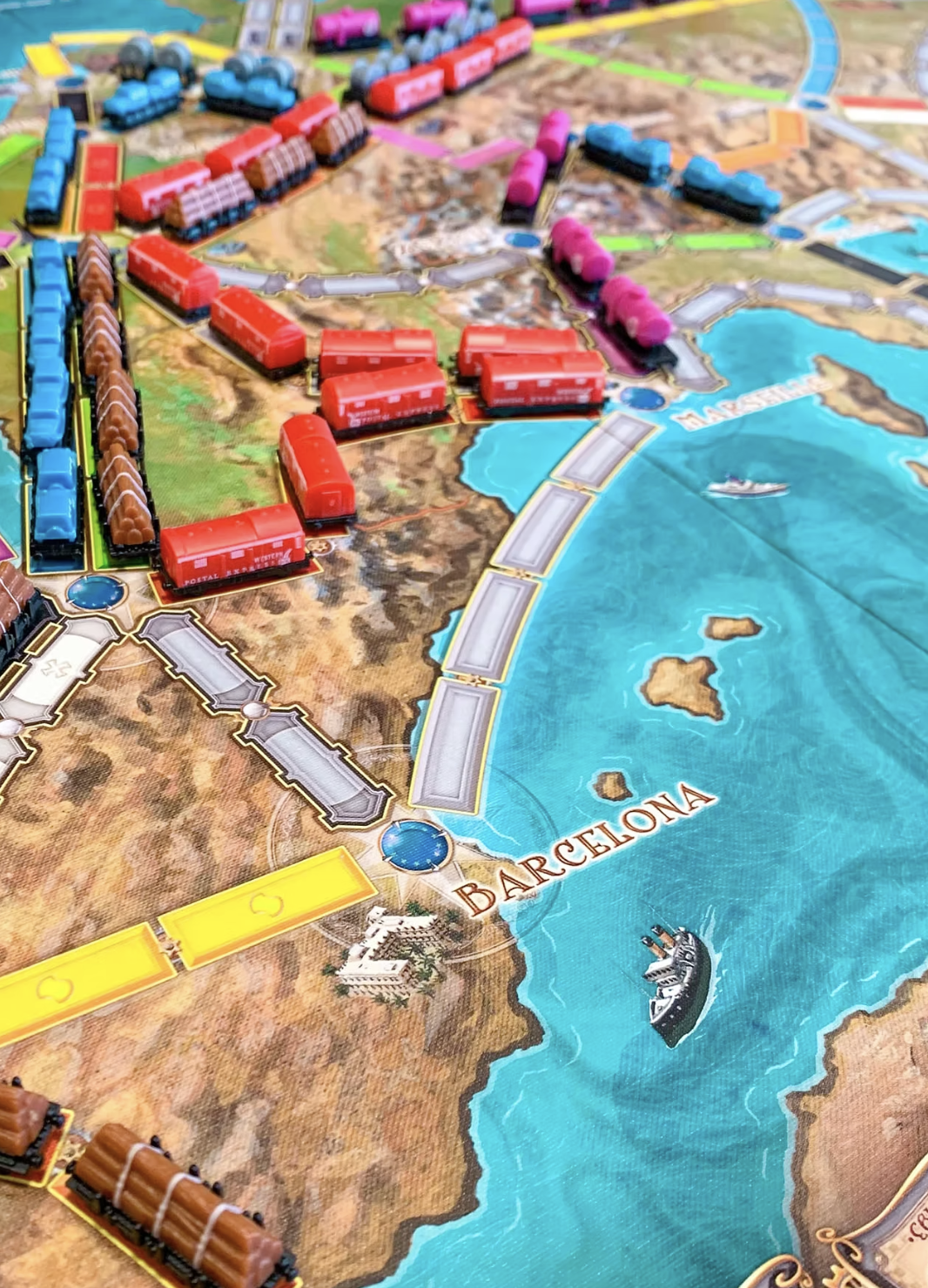
Locomotives, tunnels, and train stations add additional strategy and risk to the route-building system. Locomotives act as wild cards and are especially valuable because certain routes specifically require them, while tunnels introduce a push-your-luck element where matching cards flipped from the deck increase the cost of your route. Attempting a tunnel with exactly enough cards can therefore cost you your entire turn, so I usually mitigate the risk by collecting at least one extra card of that colour. Train stations provide the opposite feeling, acting as a backup plan by allowing you to use an opponent's route when they have blocked a connection you desperately need. However, that borrowed route does not contribute to your longest continuous path of trains, creating another strategic trade-off.
My usual strategy is to pursue the longest continuous route possible while completing as many destination tickets along it as I can. There is definitely some luck involved, because this works best when your tickets form a logical path across Europe, and there is nothing better than drawing three new tickets that all continue along routes you have already built. I almost always prioritize the large blue destination ticket you receive at the beginning, since it is worth substantial points and those same points count against you if you fail to complete it. I usually draw one or two additional destination tickets throughout the game, and from my primarily two-player experience, finishing with around five feels like a good balance between maximizing points and taking on too much risk. Near the end, you can gamble by drawing more tickets for some last-minute points, but from my experience, taking your points and moving on is usually the better choice—mitigate your risks.
-Mark Krabben
September XX, 2026