
Forest Shuffle
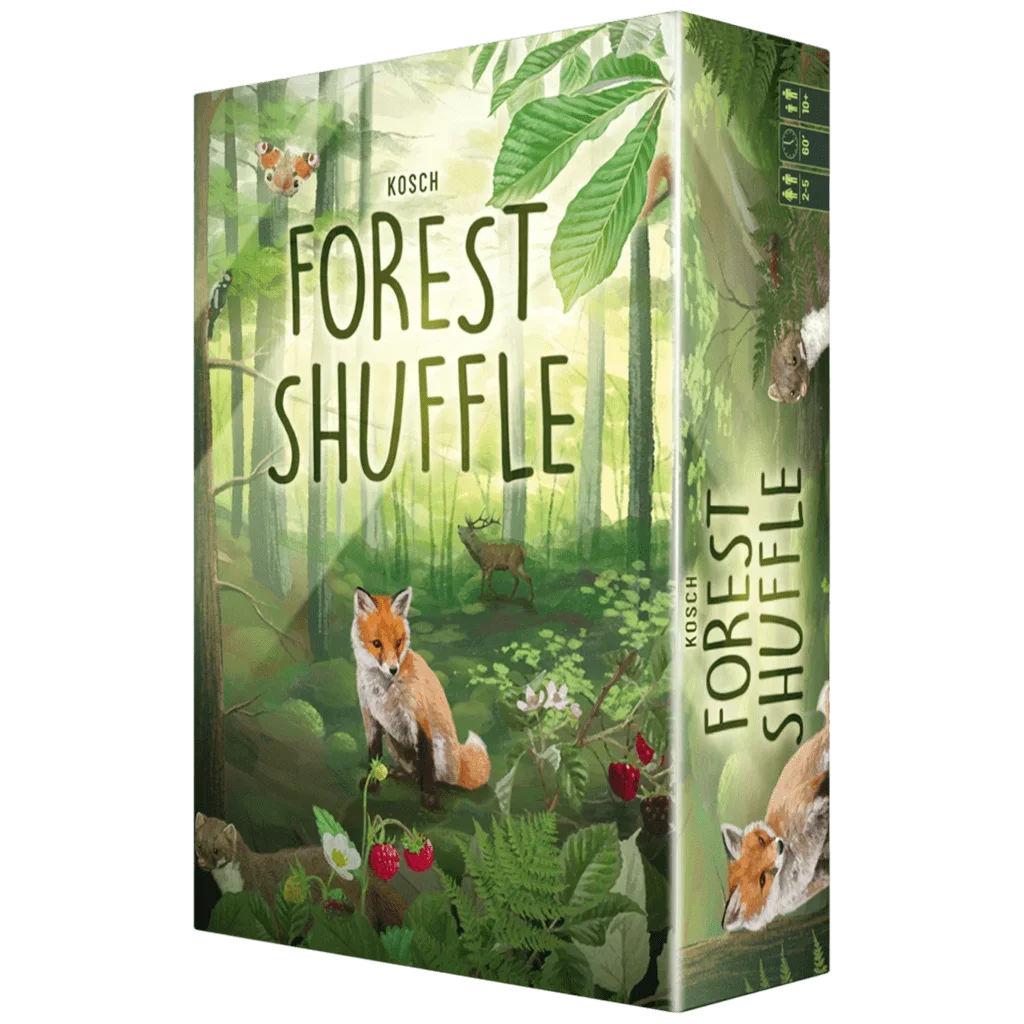
I was shown Forest Shuffle by a couple of friends (you know who you are if you’re reading this) about a year ago, and I have grown to love the game! From over-playing the base game, to visiting the Dartmoor spin-off booth at Essen Spiel in 2025, and now being stoked for the Smoky Mountains stand-alone spin-off to be released in October, I can’t get enough!
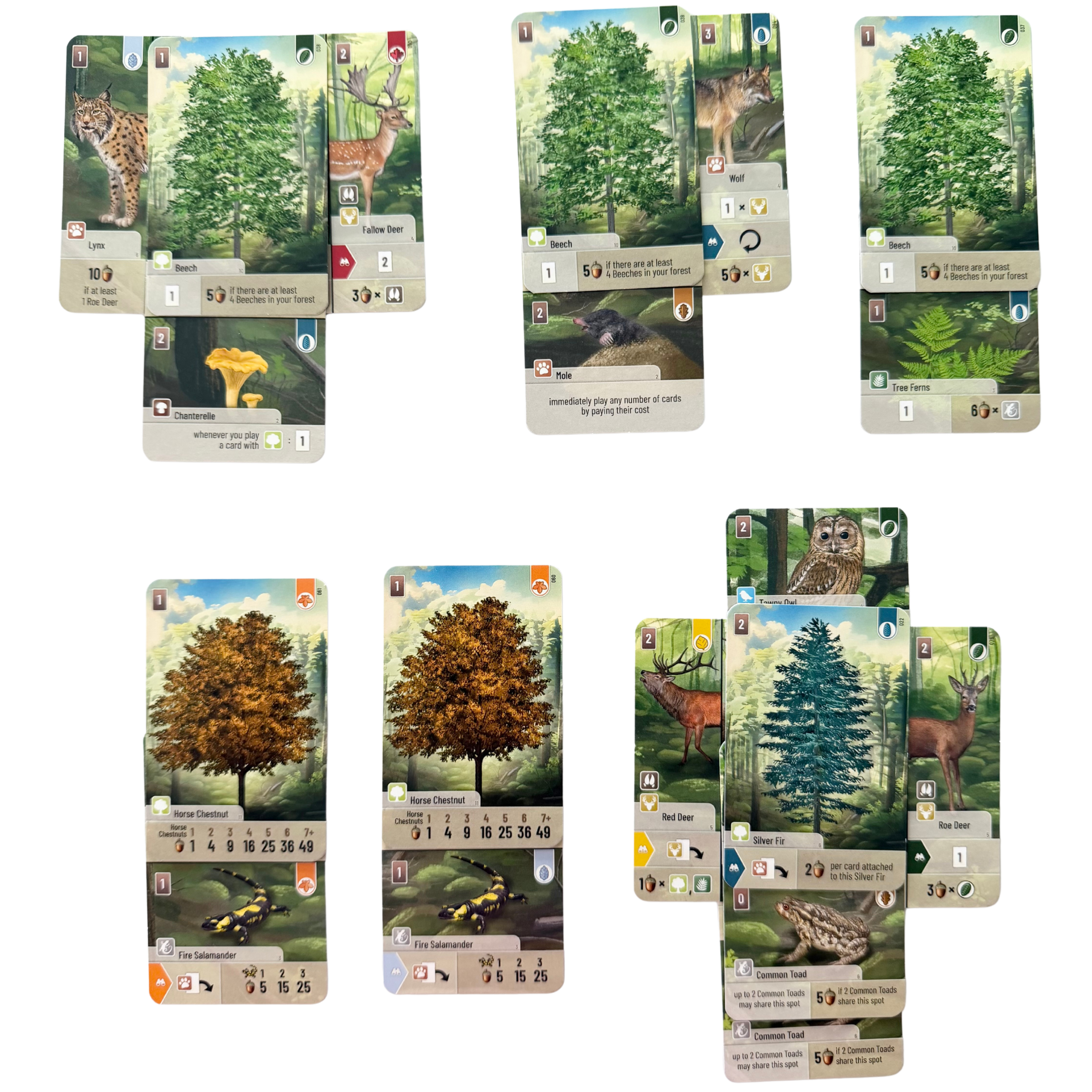
Forest Shuffle is a card-based tableau-building game where you grow a forest of tree cards, and you surround them with animals and plants on all four sides to build an ecosystem. At first glance, the game is stunning, with beautiful artwork and a cozy nature theme that seems to be poppin’ in the tabletop gaming industry right now. However, once you start learning the rules, especially if you’re new to the board-gaming hobby like I was when I first played, it can easily feel intimidating! There are a ton of icons, combo effects, and scoring opportunities displayed on every card, and not just once, but twice, since the majority of the cards are split in half for multi-purpose use! That said, once you get through the initial learning curve, gameplay becomes second nature, and it is an absolute blast!
The randomness of the card deck and the open-market discard clearing forces you to constantly pivot your strategy and adapt to whatever opportunities appear. You can go into a game planning to focus on the deer and wolves strategy, which has become quite publicly known as the dominant strategy, only for your card draws to completely change your plans, causing you to pivot.
The three “Winter is Coming” cards are such an amazing way to end the game since they create so much tension. The first winter card pulled from the deck tells everyone you have already played through 2/3 of the deck, and that the game is getting close to the end. Once the second winter card is pulled, tension escalates, and everyone at the table rushes to get their highest-scoring cards into their forest as soon as possible. The unpredictability of when the third winter card is drawn makes for a “sudden death” feeling that keeps everyone engaged until the very end.
Unfortunately, I am going to have to bash Forest Shuffle just a little bit, and it has nothing to do with the gameplay. It’s actually the final scoring, which becomes extremely tedious and mathematical. You go from a cozy nature-themed game, straight into what feels like accounting spreadsheets. That’s why I prefer playing Forest Shuffle on Board Game Arena, where points are automatically calculated by the computer. Despite its intimidating learning curve and tedious scoring, Forest Shuffle has become my favourite card game to play to date. I would especially recommend it to players who enjoy games where long-term planning competes with tactical adaptability due to rapidly changing opportunities.
Forest Shuffle was a game that I played a lot throughout the design journey of Due Diligence. Though not consciously, it may have had an affect on the Market Maker and 52-Week High/Low cards being multi-use in Due Diligence. Long story short, thank you to my friends who showed me this game! I am grateful for you both!
-Mark Krabben
May 22, 2026