
Carcassonne
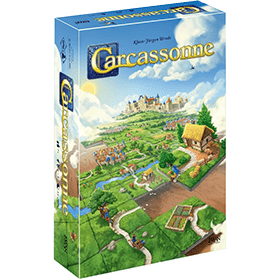
Another German designer named Klaus, and another game that won the “Spiel des Jahres” (German) “Game of the Year”. I’m starting to think that I should change my name and move to Germany. Luckily, “Euro-style” games have spread around the world, so we Canadians stand a chance. Prepare yourselves, this one is my favourite. Carcassonne! Yup, the game that officially coined the term “meeple,” short for “my people.” Now, to all meeples out there, you need to play this game if you haven’t already!
Published in 2000, Carcassonne took variable setup to a whole new level. Instead of just having the game setup be variable, like in Catan, the entire gameplay of Carcassonne is “variable”. You are literally building the board as you play, while thematically, you are building the medieval city of Carcassonne in France. The game starts with just a single 1.77in x 1.77in square tile on the table, and the map expands to 72 tiles or more, depending on the game variant. It is so satisfying to watch the map expand one tile at a time and see the magnificent city you and your opponents have built by the end of the game, regardless of whether you win or lose.
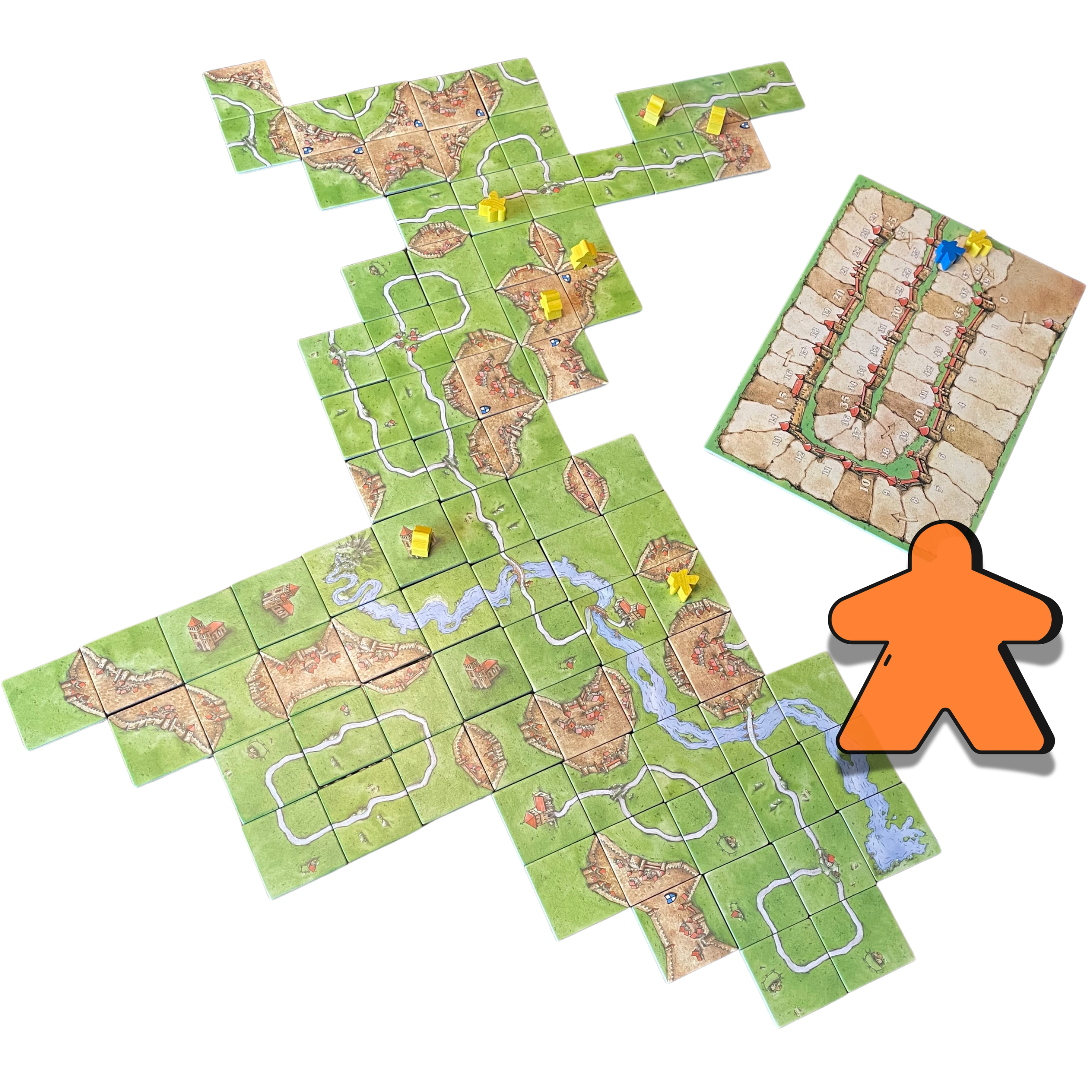
Whenever I go to a game night with people who don’t regularly play board games, Carcassonne is my go to game to pull out for an easy to learn, fun, and strategic experience. There is so much strategy in Carcassonne, and it plays quite quickly, which makes it addictive. In my opinion, it defines the word “elegance” in tabletop game design. Being a math guy, I find myself making equations for everything. The equation I’ve made up for what defines the “quality of a board game” is its depth of strategy divided by its complexity. If a game has a lot of strategy and low complexity, its quality calculation is excellent! Carcassonne tops my list of calculations for that equation.
Of course, it’s not all strategy, as luck plays a significant role in which tile you draw at the start of your turn, but the beauty of Carcassonne’s luck is that it is all input randomness. Yes, you are drawing a random tile, but the way you play that tile has an immense impact on the outcome of the game. Do you want to use the tile to grow a city, expand a road, or surround a cloister you have been building? Or, are you going to use the tile to block your opponents from finishing structures they’ve started, decreasing the probability that they'll score points and have their meeples returned to them for later use? This style of luck keeps anticipation and tension high throughout the game, hoping to draw the right tile at just the right time.
The combination of input randomness and strategic output decisions is a mechanic we have emphasized in the design of Due Diligence. Though not consciously, I’m sure the inspiration has come at least partly from Carcassonne, especially since it was the one game I played the most while developing Due Diligence.
Anyways, meeples, get playing!
-Mark Krabben
April 17th, 2026